



Buying Guide
How to Buy a Battery-Operated Portable Heater
This quick guide helps you choose a rechargeable, battery-powered portable heater for car defogging and short-term warmth in small spaces like tents, offices or golf carts. It focuses on what matters in real use: runtime, safety, portability and value.
Key factors to consider
- Primary use: Choose a unit made for quick windshield defogging and short bursts of warmth if you need it in a vehicle. For longer campsite use, prioritise runtime and spare batteries.
- Battery capacity and runtime: Many compact models use about 1500mAh batteries and deliver roughly 15 to 35 minutes per charge. Check the listed runtime and number of batteries included.
- Safety features: Look for anti-tilt or auto shut-off and overheat protection. These are essential when using a heater in a moving vehicle, tent or near papers and fabrics.
- Portability: Weight, footprint and how the unit mounts or sits in a car matter. Smaller, lighter units are easier to move but usually have shorter runtimes.
- Noise and operation: If you need the heater in an office or bedroom, confirm it is described as quiet in product details or reviews.
- Price range: Expect typical prices in the sample set to sit between about $60 and $120 CAD. Lower cost usually means shorter battery life or fewer safety features.


Types and important features to look for
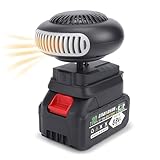
- Single-battery compact heaters: Best for fast defogging and quick warmth. Low cost, short runtime.
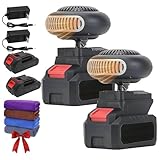
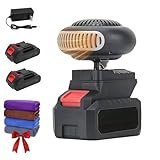
- Dual-battery or multi-battery kits: Include one or more spare batteries or extra capacity. Better for repeated use on trips.
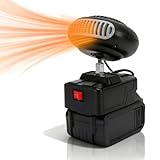
- Vehicle-focused units: Designed to clear windshields and fit in cars, trucks or golf carts. They prioritise directional airflow and fast defogging.
- Small-area indoor units: Marketed for desks or tents; check runtime and ventilation guidance.
- Must-check specifications: battery type and capacity (mAh), stated runtime, charging method and charge time, presence of anti-tilt/auto shut-off, claimed heating speed, and any listed safety certification (CSA, UL or equivalent).
Where to buy and what to check before purchase
- Online marketplaces: Better selection and price comparisons. Read customer reviews, Q and A, and seller ratings to confirm runtime claims and real-world safety. Check return policy and shipping times.
- Local retail: Offers hands-on inspection and easier returns. Good if you want the product immediately or prefer seeing size and build quality first.
- Important checks: confirm how many batteries are included, whether batteries are user-replaceable, warranty length, charger type, and any safety certification. Compare total cost including spare batteries if you need longer runtime.

Common mistakes to avoid and expert tips
- Do not expect whole-room heating. These devices are for short bursts and small areas like windshields, seats or a small tent.
- Do not ignore runtime and included batteries. A cheap unit with one 1500mAh cell may only run 15 minutes. Buy spare batteries or a dual-battery kit for repeated use.
- Do not skip safety checks. Ensure anti-tilt and auto shut-off are present and look for certifications where possible.
- Expert tips: test the heater at home to confirm defogging speed before relying on it in winter, keep it secured so the anti-tilt works properly, store spare batteries charged and separately, and prefer quieter models for indoor use. If you plan extended off-grid use, pair the unit with a compatible power bank or solar charging solution.
Final Thoughts
Pick a model that matches your main use. For quick car defogging, a compact single-battery unit will do. For camping or repeated use, get a kit with extra batteries or faster charging. Always prioritise anti-tilt and auto shut-off, verify runtime and seller reliability, and test the unit before you need it in cold conditions.