


Buying Guide
How to Buy an Electric Fireplace or Fireplace TV Stand
This quick guide helps you choose the right electric fireplace or fireplace TV stand for a Canadian home. It covers the most important decisions, the main product types, key features to check, where to buy, common mistakes and practical tips to get a safe, attractive install fast.
What to consider before you buy
Room size and heating needs: check the heater wattage and coverage. Many models offer 750 W and 1500 W modes that heat roughly up to 400 sq ft (about 37 m2).
Installation and space: decide if you want wall-mounted, recessed or freestanding. Ultra-thin wall units are about 3.8 in (9.7 cm) deep and fit into 2 x 4 or 2 x 6 stud walls; recessed installs need framing depth. Fireplaces built into TV stands combine storage and a 26 in (66 cm) inset firebox for a simpler setup.
TV and furniture compatibility: if you plan to place a TV above or on the unit, confirm supported TV sizes and the console load capacity. Measure height, clearance and cable routing before buying.
Budget and availability: common prices here range from roughly $280 to $410. Note stock levels and delivery times, especially for larger pieces.
Installation and space: decide if you want wall-mounted, recessed or freestanding. Ultra-thin wall units are about 3.8 in (9.7 cm) deep and fit into 2 x 4 or 2 x 6 stud walls; recessed installs need framing depth. Fireplaces built into TV stands combine storage and a 26 in (66 cm) inset firebox for a simpler setup.
TV and furniture compatibility: if you plan to place a TV above or on the unit, confirm supported TV sizes and the console load capacity. Measure height, clearance and cable routing before buying.
Budget and availability: common prices here range from roughly $280 to $410. Note stock levels and delivery times, especially for larger pieces.


Types and where each fits
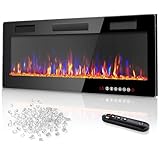
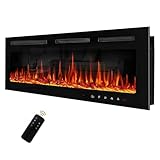
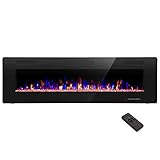
- Wall-mounted linear units: sleek, modern look. Good for tight spaces and easy visual impact. Many are ultra-thin for shallow stud walls.
- Recessed in-wall units: built into the wall for a flush, built-in appearance. Requires carpentry and correct stud depth.
- Freestanding mantel or hearth units: include a shelf or mantel and offer storage or display space. No framing needed and easy to move.
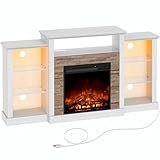
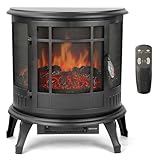
- TV stands with built-in fireplace: combine entertainment storage, power outlets and cable management. Ideal for renters or when you want storage plus ambient heat.
Key features and specifications to prioritise
- Heating power and modes: look for selectable 750 W and 1500 W settings to balance warmth and energy use.
- Flame control: independent flame-only mode, multiple flame colours, ember bed colour options, adjustable speed and brightness for ambience without heat.
- Controls and convenience: both remote and touch controls are handy; some units offer app control, music-sync LEDs and timers (1 to 8 hours or 6 hours common).
- Safety and certifications: overheat protection and an ETL or equivalent certification provide peace of mind.
- Noise level: quieter units run around 38 dB to under 50 dB. Choose lower dB for bedrooms or quiet living rooms.
- Dimensions and install notes: check overall width to match your space (common models 50 in and 60 in widths), depth for recessing, and whether the unit is rated to sit on a TV stand or under a screen.
- Extras: built-in power strips, cable management, adjustable shelves, realistic logs or crystal stones, and clear assembly instructions can save time.
Where to buy, common mistakes and quick expert tips
Online vs retail: buy online for selection and price comparisons, but check seller ratings, shipping terms and returns. Visit a showroom to see flame effects in person before committing to a specific look.
Common mistakes to avoid:
Common mistakes to avoid:
- Buying the wrong size: measure stud depth, wall cavity and TV clearance first.
- Assuming heat equals wood fire: electric units provide zone heating and ambience, not whole-house heat.
- Overlooking power and cord placement: confirm outlet location and whether the cord exit suits recessed installations.
- Skipping certification and safety features: always check for overheat cutout and a recognized safety mark.
- If you want ambience most of the year, choose a unit with flame-only mode and multicolour LEDs.
- For frequent heating, run on the lower 750 W setting to save energy and avoid tripping circuits.
- When pairing with a TV, allow proper clearance and use a unit with good cable management and integrated outlets.
- Pick a seller with clear return policies and reliable customer service for installation help or replacements.
Final Thoughts
Choose the type that fits your space and skill level: freestanding or TV-stand units for easy setup, recessed or wall-mounted for a built-in look. Prioritise correct size, safety certification, and flexible flame versus heat controls. Measure first, read seller policies, and pick features you will use regularly for the best value and a worry-free install.