


Buying Guide
How to Buy Kitchen Dish Towels
This quick guide shows what matters when buying kitchen dish towels so you can pick useful, long lasting cloths fast. It covers key factors, types, must-have specs, where to buy, common pitfalls and simple expert tips based on real product details.
Key factors to consider
Think about how you use towels and match features to tasks.
- Material and absorbency: Cotton (including ring spun) soaks well and feels soft. Microfiber and waffle weaves absorb quickly and dry faster but can be too abrasive for delicate glassware.
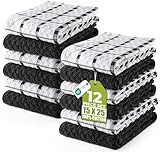
- Size and pack count: Typical sizes range from about 12 x 12 for small cloths up to 18 x 28 and 26 x 18 for larger towels. Buy enough so you always have clean spares; multi-packs of 6 to 12 are common.
- Lint and finish: Look for lint-free or tightly woven finishes if you dry glass. Dobby, terry and flat weaves behave differently; read descriptions.
- Care and durability: Check washing instructions. Avoid towels that require special care if you need low maintenance. Expect some initial shrinkage with cotton unless pre-shrunk.
- Value and price: Multi-packs often cost between about $25 and $35. Balance cost with features like thicker GSM, hanging loops and reinforced edges.


Types and what they are best for
- Flat weave cotton: Lightweight, good for polishing and general drying. Dries slower but is soft on glass.
- Terry cloth cotton: Thicker and very absorbent, best for heavy spills and drying cookware.
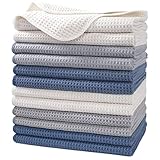
- Waffle weave: Fast drying and highly absorbent, good for everyday drying and preventing damp smells.
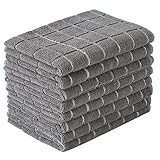
- Microfiber: Extremely absorbent and lint free, ideal for streak-free glass and stainless steel. Do not use on very hot surfaces.
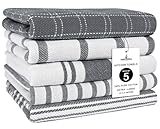
- Mixed texture sets: Sets that combine flat and terry towels give flexibility for different tasks.
Important features, where to buy and mistakes to avoid
Watch for these specs and buy where it makes sense.
- GSM or density: Higher GSM (for example around 350 to 400) usually means thicker and more absorbent towels.
- Construction details: Reinforced edges, hanging loop and consistent weave improve longevity and storage convenience.
- Care labels: Machine washable, tumble dry low and avoid fabric softener for best life. Some microfiber items warn against high heat.
- Online vs retail: Online gives more selection and multi-pack value and often free shipping. Read full descriptions and customer photos. In-store lets you feel texture and check lint and thickness before buying.
- Common mistakes: Buying only thin, low GSM towels that wear out quickly; using microfiber on delicate nonstick surfaces at high heat; assuming colour photo shows true texture and lint behaviour.

Expert tips and quick recommendations
- Buy a mixed set: Combine cotton terry for heavy duty, flat cotton for polishing and microfiber for glass to cover all tasks.
- Prewash before first use: This reduces lint and improves absorbency.
- Stock quantity: A household of 2 to 4 people should keep at least 6 to 12 towels on rotation.
- Care trick: Skip fabric softener and use low heat to preserve absorbency and avoid shrinkage.
- When in doubt: Choose slightly larger towels and medium-high GSM for best versatility.
Final Thoughts
Pick towels that match your most common kitchen jobs: heavier cotton for pots and spills, flat cotton for glass, and microfiber for streak-free drying. Buy a multi-pack with a mix of weaves, prewash, and follow care instructions to get the best value and lifespan.