

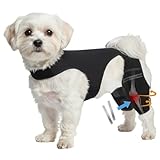

Buying Guide
How to Buy Dog Knee Braces
This short guide helps you choose a dog knee brace that improves mobility and comfort. It covers the key factors to check, the main types available, must-have features, where to buy, common mistakes to avoid and quick expert tips so you can act fast and with confidence.
Key factors to consider
Identify the problem first - ligament tear, CCL/ACL injury, patellar luxation, post-surgery recovery or chronic arthritis all need different levels of support.
- Severity and vet advice: always get a vet diagnosis before buying. A brace can help mild to moderate instability and rehab but may not replace surgery for severe tears.
- Fit and sizing: measure the leg joint circumference and length carefully and follow the seller’s size chart. A snug fit is required but it must not cut off circulation.
- Support level: choose metal spring or stabilizer inserts for significant instability; choose soft neoprene sleeves for mild support and warmth.
- Materials and comfort: look for breathable, perforated fabrics (neoprene, polyester, spandex) and soft liners to reduce chafing and heat buildup.
- Adjustability and retention: wide Velcro straps and extended straps improve fit and reduce slippage. Chew-resistant fastening is a bonus.
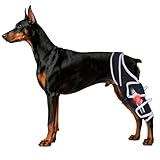
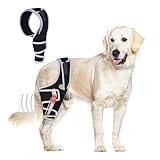
- Visibility and safety: reflective trim improves night visibility and has been shown to be visible at long distances in low light.
- Return policy and customer support: pick sellers that offer size exchanges, return windows and fitting help or how-to videos.

Types and categories
Know the common styles so you can match the brace to your dog’s needs.
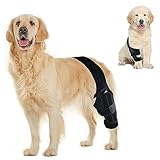
- Single-leg support: used to stabilise one injured front or hind leg; good for targeted injuries.
- Universal front/rear braces: one design fits either front or back leg; convenient if you need flexibility.
- Dual or double hind-leg braces: support both back legs at once, useful for hip dysplasia, degenerative conditions or dogs that need extra balance support.
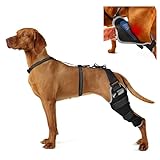
- Metal-stabilizer braces: include bendable or spring supports for firm external stability after moderate tears or during rehab.
- Soft sleeves and compression braces: provide warmth, compression and mild stabilization for arthritis and mild strains.
- Harness-style braces with handle: combine lifting assistance with leg support for dogs with limited mobility or post-surgery needs.
Where to buy, fit steps and quick buying checklist
Online stores and marketplaces
- Pros: wider selection, easy price comparison, detailed customer reviews and how-to videos, often lower prices. Expect typical prices around $70 to $90 CAD for braces with stabilizers.
- Cons: fit can be hit or miss; confirm return and exchange policies before buying.
- Pros: try on in person, get vet-recommended products and hands-on fitting help.
- Cons: smaller selection and sometimes higher prices.
- 1. Measure the joint circumference and length; check the manufacturer's chart twice.
- 2. Start with short wear sessions (30 minutes) and increase gradually over 1 to 14 days while watching for rubbing or limping changes.
- 3. Remove the brace 2 to 3 times daily for rest and for skin checks; do not leave it on 24 hours unless instructed by a vet.
- 4. Check straps regularly and re-tighten to a secure but comfortable level.

Common mistakes to avoid and expert tips
- Avoid assuming one size fits all. Measure and use size charts; front and back legs can differ and may need different sizes.
- Do not use a brace as a long-term substitute for a vet-recommended surgery when indicated.
- Do not overtighten straps. Overcompression causes circulation problems and discomfort.
- Watch for chewing or removal attempts. Choose durable materials and check fastenings.
- Clean and dry the brace regularly to prevent skin irritation and odour.
- If the leg is visibly unstable choose a brace with metal stabilizers for firmer external support.
- Pick breathable, perforated fabrics for active dogs and warm climates to reduce sweating and skin issues.
- Reflective trim is a useful safety feature if you walk at dawn, dusk or night; it increases visibility over long distances.
- Prefer sellers who offer fitting videos, ready customer support and reasonable return windows.
- Monitor progress and consult the vet if pain, swelling or worsening gait appears after introducing the brace.
Final Thoughts
Choose a brace that matches the injury severity, fits precisely and is comfortable for your dog. Measure carefully, buy from a seller with clear size charts and returns, start with short wear times and keep your vet in the loop. With the right type and a proper fit you can improve mobility and speed recovery while keeping your dog safe and comfortable.