


Buying Guide
How to Buy a Massage Gun
This quick guide helps you pick the right percussion massage gun for recovery, pain relief or everyday muscle care. It covers the key decision points, types available, must-have specs, where to buy and the common mistakes to avoid so you can act fast and confidently.
Key factors to consider
Think about how you will use the device and match features to need.
- Primary use: daily recovery, deep tissue work, office tension or travel.
- Intensity: look at top RPM and amplitude to judge how deep the device works.
- Portability: weight and size matter if you travel; pocket models weigh under 0.5 lb while full-size units are often around 1.5 lb.
- Noise level: quieter units sit around 40 dB; if you plan to use it at work or late at night aim for lower noise.
- Battery and charging: fast PD charging and USB-C are convenient; typical full charge times range 1.5 to 2 hours.
- Attachments and extras: multiple heads, a carry case, and safety features like auto shut-off are useful.
- Budget: effective models are commonly available in the $70 to $140 CAD range; choose features over brand hype.


Types you will see
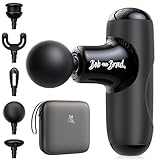
- Mini pocket models: ultra portable, light weight and good for on-the-go relief; lower amplitude but enough for warm up and light recovery.
- Standard consumer units: mid-size with 4 to 5 speeds, multiple heads and better battery life for home use.
- Performance/pro models: higher stall force and larger amplitude for athletes and heavy usage; often metal housing and ergonomic handles.
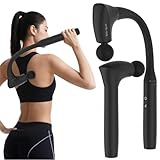
- Specialty models: include features such as heating or cooling heads, Bluetooth app control or unique handle designs for hard-to-reach areas.
Important features and specs to check
Use these objective specs when comparing models to avoid marketing fluff.
- Speed range: common ranges are 1,800 to 3,200 RPM; more speeds give finer control.
- Amplitude: 7 mm is gentler, about 10 mm delivers deeper tissue work; choose based on how intense you want the massage.
- Stall force: higher stall force (measured in pounds) helps press into tight muscles without the motor stalling.
- Noise: look for units rated near 40 dB for quiet operation.
- Charging: PD fast charging and USB-C shorten downtime; expect 1.5 to 2 hours on fast-charge models.
- Battery life: check run time per charge and whether a power bank can charge it on the go.
- Auto shut-off and safety: a 10 minute auto-off prevents overuse; also review contraindications in the manual.
- Attachments: at least 4 to 5 heads (ball, flat, fork, bullet, specialised heat/cold head) cover most needs.
- Build and ergonomics: metal housing and non-slip handles stand up to frequent use; ergonomic designs reduce wrist strain.

Where to buy and mistakes to avoid
Buyers have two main routes and several common pitfalls to avoid.
Online benefits
Online benefits
- Wider selection and real user reviews.
- Often better deals in the $70 to $140 CAD range.
- Check seller ratings, warranty terms and Canada return policies before you buy.
- You can test weight, grip and perceived noise before purchase.
- Immediate pickup and local returns.
- Choosing solely on price while ignoring amplitude, noise or charging type.
- Buying a charger-incompatible model without confirming plug or adapter type.
- Overlooking warranty and Canadian return conditions.
- Using high intensities on fragile areas or ignoring medical warnings.
- For travel pick a pocket-sized unit under 0.5 lb with USB-C charging.
- For deep recovery prioritise amplitude around 10 mm and higher stall force.
- Start at low speed and short sessions; the 10 minute auto-off is useful.
- Prefer fast PD charging if you want short downtime between sessions.
Final Thoughts
Match the device to how you will use it: pick a mini for travel, a mid-size for everyday recovery and a higher-force unit for athlete-level needs. Focus on amplitude, noise, charging type and attachments rather than branding. Check warranty and return policy before buying and start conservatively when you begin using the device.