




Buying Guide
How to Buy a Clear Chair Mat for Hard Floors
This quick guide helps you choose a clear chair mat for hard floors. It covers what matters most, the common types, key specs to check, where to buy, mistakes to avoid and pro tips so you get protection and smooth chair movement without surprises.
Key factors to consider
Measure first and be precise
Floor compatibility and thickness
- Measure the area behind and under your desk, and add at least 10 to 15 cm so your chair rolls freely.
- Match mat shape to desk layout: rectangular for centre desks, lip options for desks where the mat slides under the desk.
Floor compatibility and thickness
- These mats are made for hard floors only. Do not use on carpet unless the product specifically says carpet compatible.
- Look for mats 0.06 in (about 1.5 mm) or thicker for durability and smoother rolling; very thin mats may crack or deform under casters.


Types and important features
Common types you'll find
Features to check before buying
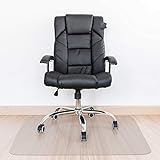
- Flat rectangle without lip: good for general coverage and easy placement.
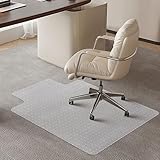
- Rectangle with lip: extends under the desk to protect more area and stop edge catching.
- Smaller or custom sizes: suitable for compact desks or corner offices.
Features to check before buying
- Material: PVC or polyethylene are common; look for non-toxic, phthalate-free labels if indoor air quality matters.
- Underside: anti-slip frosted or textured backs keep mats from sliding on wood or tile.
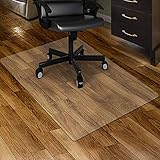
- Transparency: fully clear lets your floor show through; lightly frosted tops hide scratches and reduce glare.
- Packaging and flattening: rolled mats ship rolled and may curl. Check return policy and packaging notes about flattening time.
Where to buy and common mistakes to avoid
Online vs retail
Common mistakes to avoid
- Online gives more sizes and price options; check shipping costs and read return and refund policies for curled or damaged mats.
- In-store lets you feel thickness and check texture but selection may be limited.
Common mistakes to avoid
- Buying the wrong size: too small leaves your floor exposed, too large can look awkward and collect dust.
- Using a hard-floor mat on carpet or vice versa.
- Ignoring the underside texture; a smooth back can slip on polished floors.
- Not allowing time to flatten rolled mats before use.

Expert tips and a quick checklist
Pro tips for long life and best performance
Quick buying checklist
- Use soft casters or a caster cup if you have softer hardwood to reduce indentations.
- Place heavy objects on curled corners overnight to speed flattening, or unroll and let it warm in the room for a few hours.
- Clean with a damp cloth and mild soap; avoid harsh solvents that can cloud clear mats.
- Check for non-toxic labels if you are sensitive to odour or have a small child at home.
Quick buying checklist
- Correct size and shape
- Hard-floor compatibility and anti-slip underside
- Reasonable thickness (approx 0.06 in or more)
- Non-toxic material and clear return policy
- Price fits your budget; expect typical prices in the mid tens to low hundreds CAD
Final Thoughts
Pick a mat that fits your desk footprint, is designed for hard floors, and has an anti-slip underside. Measure carefully, choose a suitable thickness, and allow rolled mats time to flatten. Buy where you can easily return or inspect if you need to check thickness or texture. With the right mat you protect your floor and get smooth, low-fatigue chair movement.