



Buying Guide
How to Buy Toilet Safety Rails
This short guide helps you choose a toilet safety rail that fits your toilet and the person who will use it. It covers what to check, the main product types, key specifications, where to buy, common mistakes and quick expert tips so you can act with confidence.
Key factors to consider
Who will use it and how often. Consider balance, upper body strength and whether the user needs help only for sitting and standing or for transfers as well.
- Toilet compatibility: check seat shape (round or elongated), visible seat bolts, and whether the toilet is skirted or a bidet. Some frames will not fit smart or quick-release seats or toilets with hidden bolts.
- Stability and load rating: look for a minimum 300 lb (about 136 kg) rating for most adults; many units list 350 lb (about 159 kg).
- Floor surface and mounting method: suction feet work only on smooth, gap-free tile; clamp or screw attachments integrate with the toilet and are more stable on other floors.
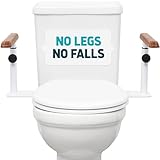
- Ease of cleaning and trip risk: no-legs designs attach to the toilet and eliminate a floor-level trip hazard and make cleaning easier.


Types and how to choose
There are four practical categories to know about:
- Attach-to-bowl frames without legs - mount to the seat bolts or under the seat. Pros: very stable if installed correctly, easier to clean, low trip risk. Cons: may require removing the seat during installation and will not fit skirted or hidden-bolt toilets.
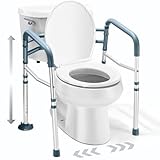
- Floor-standing frames with suction feet or wide base - stand on the floor and often fold. Pros: easy to remove and portable. Cons: can be a trip hazard and suction pads only work on smooth tile surfaces.
- Foldable or portable rails - ideal for travel or temporary use. Pros: compact and light. Cons: usually less rigid than permanent frames.
- Enhanced frames with alarms or accessories - include wireless call buttons or padded grips. Pros: add safety for lone users. Cons: cost more and add complexity.
Important features and specifications to check
Check these concrete details before you buy:
- Adjustability: height and width adjustments let you fit different users and toilet types. Typical useful height adjustment is in the range of 20 to 30 cm (8 to 12 in) and width adjustment that covers common bowl sizes.
- Material and finish: rust-resistant steel, carbon steel or aluminum are common. Look for powder coated or rustproof finishes for long life in a humid bathroom.
- Handles and comfort: padded, textured grips improve hold and comfort during use.
- Installation method and tools: some frames assemble tool-free in minutes, others require removing the toilet seat and installing screw-in pins. Check what is included.
- Suction pad design: large, high-elasticity pads stick better to tile but will not adhere to uneven floors or over grout gaps.
- Accessories and service: some products include spare footings, a wireless alarm or a warranty and customer support. These extras are helpful if the user is frail or lives alone.

Where to buy, mistakes to avoid and quick expert tips
Online shopping gives selection and user reviews. In-store or medical supply shops allow hands-on fitting and immediate pickup. Before you buy, check return policies and warranty details.
- Common mistakes to avoid: not measuring bolt spacing or seat shape, assuming suction will work on all floors, buying the cheapest without checking stability, and forgetting to check compatibility with bidets or smart seats.
- Expert tips: measure twice - seat bolt spacing and total toilet height are the most common causes of returns. Prefer attach-to-bowl options if you want a low trip risk and easier cleaning. If the bathroom has tile, confirm suction pad size and that pads sit on uninterrupted tile. Choose at least 300 lb capacity, pick rust-resistant materials and padded grips, and consider a model with an emergency call function for users who are often alone.
- When to get professional help: if the toilet is skirted, has hidden bolts or odd dimensions, ask a clinician or a local medical supply store for fitting advice or professional installation.
Final Thoughts
Buy a rail that fits the toilet and the user, prioritizing stability, correct attachment and a suitable weight rating. Measure the toilet, choose the mounting style that matches your floor and cleaning needs, and confirm returns and warranty before purchasing. Small extra steps now will avoid risky returns and keep the user safer at home.


