




Buying Guide
How to Buy a Fitness Tracker or Smart Band
This quick guide helps you pick a fitness tracker or smart band that fits your goals, budget and phone. Use the checklist and short tips below to compare models and buy with confidence.
What to consider before you buy
Decide what you want it to do for you:
- Daily activity and steps only: pick a simple band with long battery life.
- Running and outdoor workouts: choose a device with built-in GPS and accurate heart rate.
- Health monitoring and sleep: look for continuous heart rate, SpO2 and sleep stage tracking.
- Smartwatch features: if you need phone calls, mobile payments or voice assistant, choose a fuller smartwatch experience.
Also consider fit, comfort, budget and whether you want an app subscription for deeper insights.

Types and who they suit
There are three practical categories:
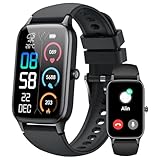
- Full smartwatches: include built-in GPS, on-wrist calls, app ecosystem and multi-day battery. Good for tech users who want a single device for fitness and phone-lite tasks.
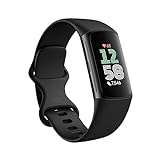
- Advanced fitness bands: focus on accurate health metrics, stress and sleep tools, many workout modes and mid-range battery life. Great for serious exercisers who prefer a lighter wrist profile.
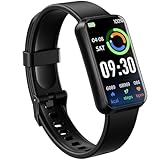
- Budget long-life trackers: basic sensors, long battery measured in weeks and simple notifications. Ideal for users who prioritise battery and price over advanced sensors.
Key features and specs to check
- Heart rate sensor: 24/7 monitoring gives useful trends. Look for devices that report heart rate zones during exercise.
- GPS: built-in GPS is best for accurate route and pace; connected GPS saves battery but depends on your phone.
- Battery life: expect 5 to 7+ days for smartwatches, and 20 to 60 days for basic bands in real use depending on features enabled.
- Water resistance: 50 metres is swim-friendly; 1 ATM covers rain, hand washing and light splash only. Check manufacturer guidance on hot water and swimming.
- Health metrics: SpO2, stress and sleep stages are valuable but not medical diagnostic tools. Use trends not single readings.
- Workout modes and auto-detect: more modes and automatic exercise detection help track varied activities accurately.
- Compatibility and app: confirm iOS and Android support, and whether premium features require a subscription or trial.
- Strap and build: interchangeable bands, weight and materials affect comfort for all-day wear and sleep tracking.
- Warranty and support: check warranty length and return policy before you buy.
![Samsung Galaxy FIT 3 [2024] 1.6" AMOLED Display | 13 Days Battery Life | 100+ Watchfaces | 100+ Exercise Modes | CAD Version & Warranty - (Black)](https://m.media-amazon.com/images/I/31nT6aEFgeL._SL160_.jpg)
Where to buy, common mistakes and quick expert tips
Online vs retail:
- Buy online for better prices and models selection, but confirm seller reputation and official warranty.
- Buy in-store to try fit, screen size and strap comfort before committing.
Common mistakes to avoid:
- Assuming sport watch battery claims equal real world use. GPS and continuous tracking drain battery fast.
- Ignoring phone compatibility or required app permissions.
- Expecting medical accuracy from consumer trackers.
- Buying without checking return or exchange policy for fit and comfort.
Expert tips:
- If you run outside often, prioritise built-in GPS over slightly longer battery life.
- If you want minimal charging, choose a basic band that offers weeks of battery.
- Look for a free trial of premium features so you can test advanced sleep and recovery tools.
- Check the waterproof rating and avoid wearing the device in hot baths or saunas if not rated for that use.
- Test the band fit for sleep tracking and make sure replacement bands are available.
Final Thoughts
Match the device type to your main goal, check core specs like GPS, sensors and battery, and try on for fit when possible. Buy from a trusted retailer, confirm warranty and returns, and start with default settings before enabling intensive tracking features. Small choices now make for a better long term experience.