



Buying Guide
How to Buy a Kids Play Kitchen
This quick guide helps you pick the right play kitchen for toddlers and young kids. It covers what matters most, the common styles you will find, the key features and specs to check, where to buy and practical tips so you make a smart, safe purchase fast.
Key factors to consider
- Age and safety: choose sets labelled for your child s age. Avoid small parts for kids under 3 and look for safety certifications such as ASTM F963 and CPSIA or comparable marks.
- Material and finish: solid wood or MDF with non toxic paint lasts longer than thin plastic and resists wobble and chewing.
- Size and layout: measure your play area. Note overall width, depth and height so it fits and leaves room to move around.
- Longevity: height adjustable designs give more years of use as kids grow.
- Interactive features: lights, sounds, ice dispenser or realistic knobs add play value but may need batteries and can increase assembly or maintenance.
- Accessories and storage: check how many pots, pans and pretend food are included and whether the set has shelves or hooks to keep things tidy.
- Assembly and anchoring: expect some assembly. Look for clear instructions and an anti tip or anchor option for stability.


Types and styles available
- Compact tabletop: small footprint, good for tight spaces and younger toddlers.
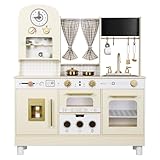
- Freestanding full kitchens: mimic a real kitchen with oven, sink, fridge and multiple play stations for group play.
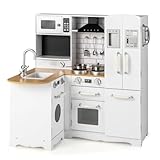
- Corner and L shaped sets: maximise floor space and encourage collaborative play.
- Adjustable height models: three height settings let the set grow from about age 3 to 7 or 8.
- Deluxe interactive sets: include electronic lights, sounds, ice or coffee dispensers for more realistic role play.
Features, common mistakes and specs to check
- Must check specs: exact dimensions, recommended age, weight, material, included accessories count, battery needs and whether an anti tip anchor is supplied.
- Safety checks: smooth rounded edges, non toxic paint, BPA free parts, no loose small pieces for younger children.
- Common mistakes to avoid: buying without measuring space, assuming photos show all accessories, choosing a set with tiny parts for toddlers under 3, ignoring anchoring and safety labels, and underestimating assembly time.
- Practical checks before buying: read user reviews for quality and durability notes, confirm which accessories are included, and check return policy in case parts are missing.
Where to buy and expert recommendations
- Online: best for selection, price comparison and finding deals. Confirm free shipping and delivery date and check seller ratings and return policy.
- In store: useful to check build quality, finish and size in person. Bring measurements and test drawer or door fit if possible.
- Expert tips: measure the play area and doorway before purchase, prefer wood or high quality MDF with non toxic finishes for longevity, pick adjustable height if you want the set to grow with your child, keep receipts and photos of parts for warranty claims, and shop holiday sales to save on higher end sets.
Final Thoughts
Prioritise safety, real measurements and durability. For most families a sturdy wooden set with safety certification, good storage and adjustable height gives the best value. Buy from a seller with clear returns and delivery info, and keep an eye out for seasonal deals to get more accessories for less.


